Home/History
Our Roots
The story behind October One.
From a single day in Lagos in 1960 to an annual gala in America — the history of Nigerian Independence Day, how it’s carried on here, and what the Nigerian diaspora has built in this country.
History Of Nigerian Independence Day
From colony to nation, and beyond.
On October 1, 1960, Nigeria became an independent nation. Everything since — including this platform — traces back to that day.
Independence
Nigeria gained independence from British colonial rule. At a ceremony in Lagos, the Union Jack was lowered and the green‑white‑green Nigerian flag — designed by Taiwo Akinkunmi — was raised for the first time. Sir Abubakar Tafawa Balewa became Nigeria’s first Prime Minister, with Dr. Nnamdi Azikiwe as the first Governor‑General.
A Republic
Three years to the day after independence, Nigeria became the Federal Republic of Nigeria, with Nnamdi Azikiwe as its first President.
A Growing Diaspora
Beginning with students and professionals in the 1960s and 70s and accelerating in the decades since, generations of Nigerians have built lives in the United States — today one of the largest and fastest‑growing African diaspora communities in the country.
October One Founded
Nigerian Independence Day Inc. (NFP) was established to give that community, and this day, a lasting home in America.
 Naija Day Gala
How It’s Celebrated In The US
A day set aside, like others before it.
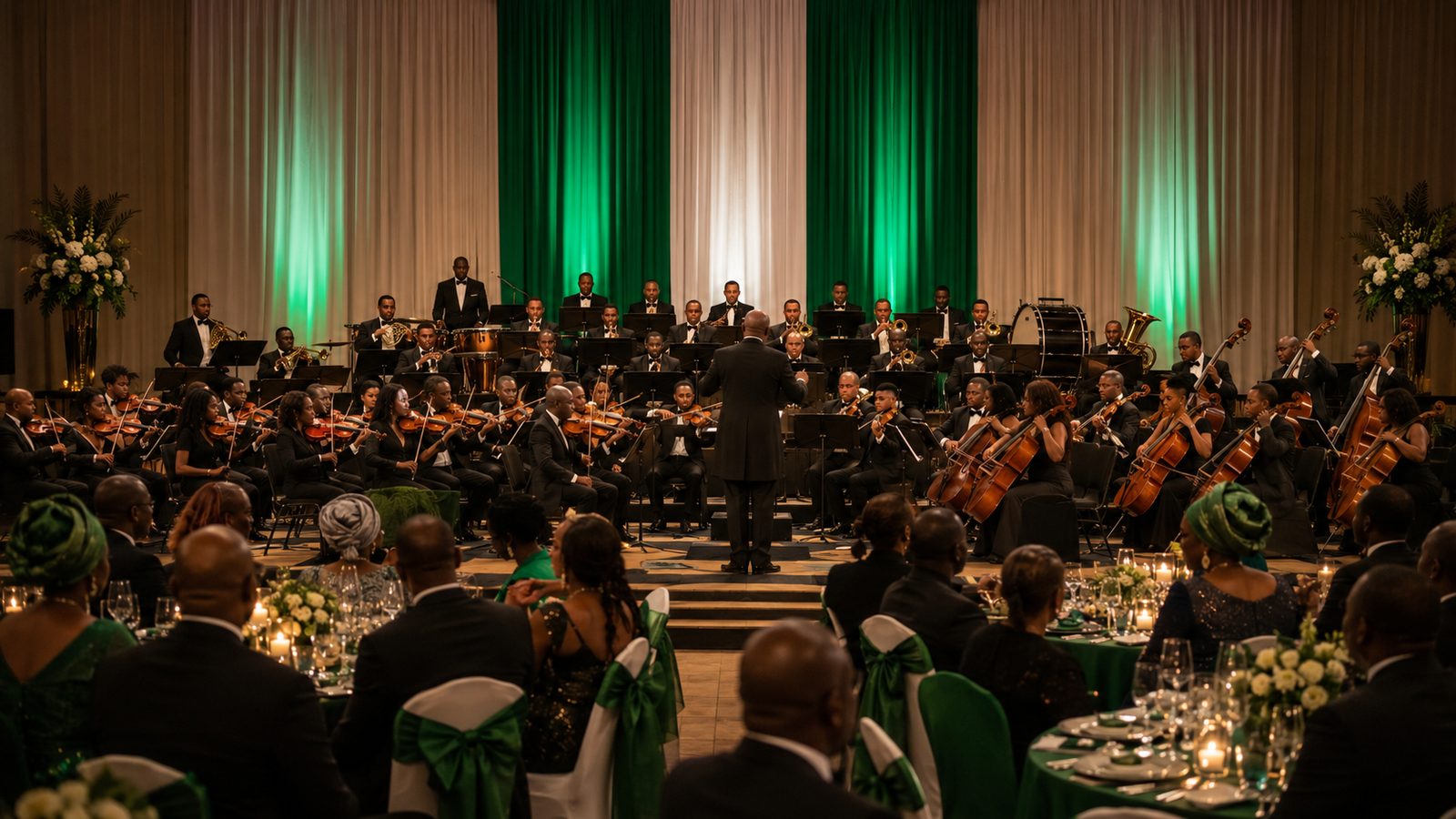
In the spirit of Cinco de Mayo, St. Patrick’s Day, and Columbus Day, communities across the United States mark October 1st with their own gatherings — cultural showcases, community dinners, and celebrations of heritage. October One’s Naija Day Gala is one expression of that: a single evening that holds orchestral elegance, festival pageantry, food, and family side by side.
Nigerian Contribution To The US
A community that punches well above its weight.
Nigerians are one of the most educated immigrant groups in America, and the numbers tell a consistent story of achievement.
Education
Around 6 in 10 Nigerian‑born adults in the US hold a bachelor’s degree or higher — more than double the national average — per Pew Research Center and Migration Policy Institute analyses of U.S. Census data.
Income & Work
Nigerian American households report median incomes above the national median, with strong labor force participation, according to U.S. Census Bureau estimates.
Scale
Nigeria is the largest source of Black African immigration to the United States, with communities established in nearly every major American city.
That track record shows up in individual stories too — from Ngozi Okonjo‑Iweala, the first woman and first African to lead the World Trade Organization, to celebrated author Chimamanda Ngozi Adichie, to Nigerian‑American professors at MIT, Stanford, and Harvard.
Sources: Pew Research Center, U.S. Census Bureau (American Community Survey), Migration Policy Institute.